Friday Oyster Facts
Learn something new every week from leaders of our local aquaculture industry, culinary experts, environmental stewards, oyster lovers, locals, and more.
Friday, February 27th:
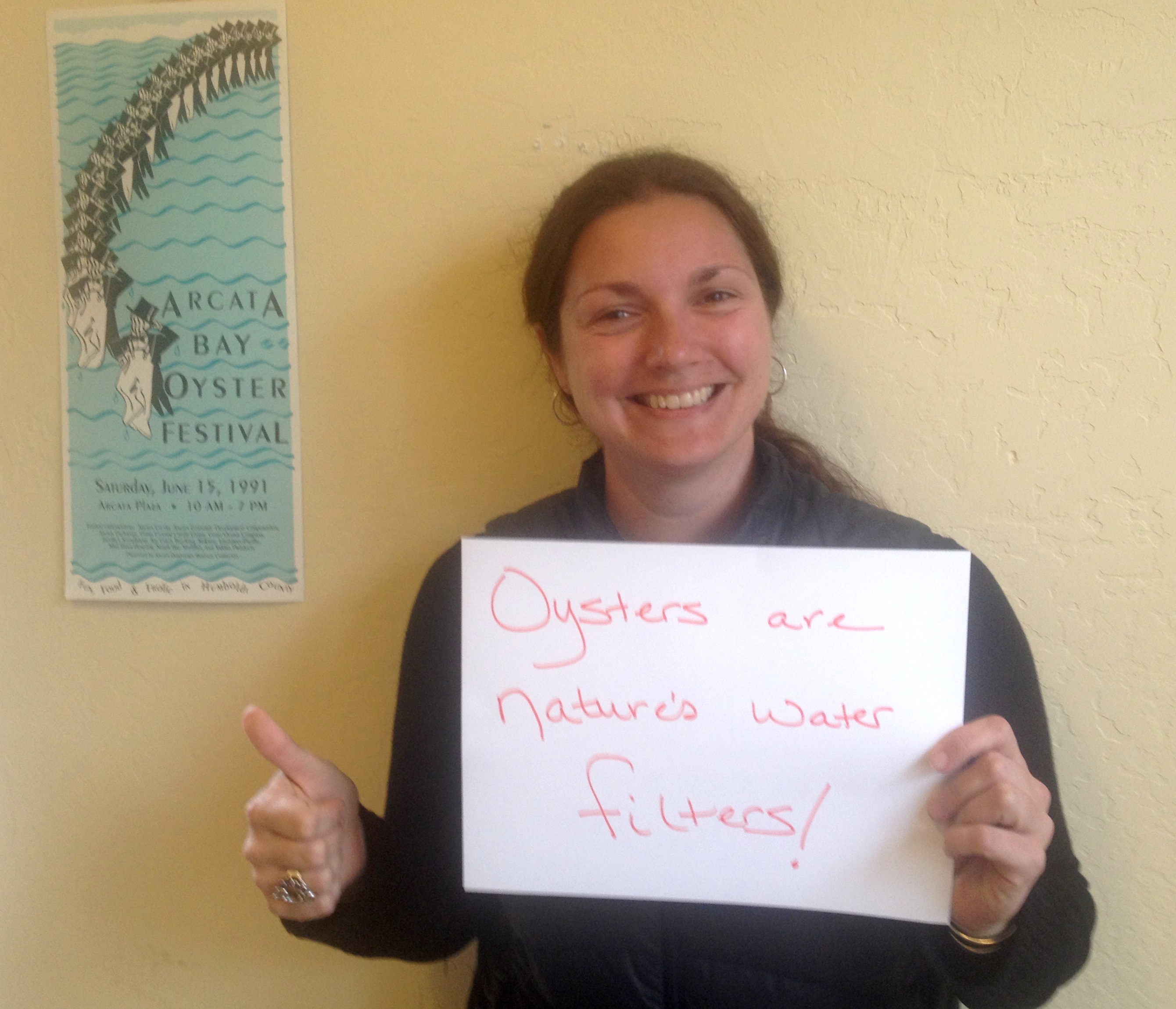
Just ask Nancy Stevens, she knows. Oysters are great for the ecosystem — they filter the water around them for phytoplankton, and then pump it out cleaner. That’s why they’re so susceptible to pollutants, because they’re essentially taking in poison along with nutrients. Oysters also stick to the same beds over generations, and their calcified shells form an aquatic apartment building for little sea creatures, which in turn feed growing salmon and other fish. This is all good for Humboldt Bay!
Friday, February 20th:
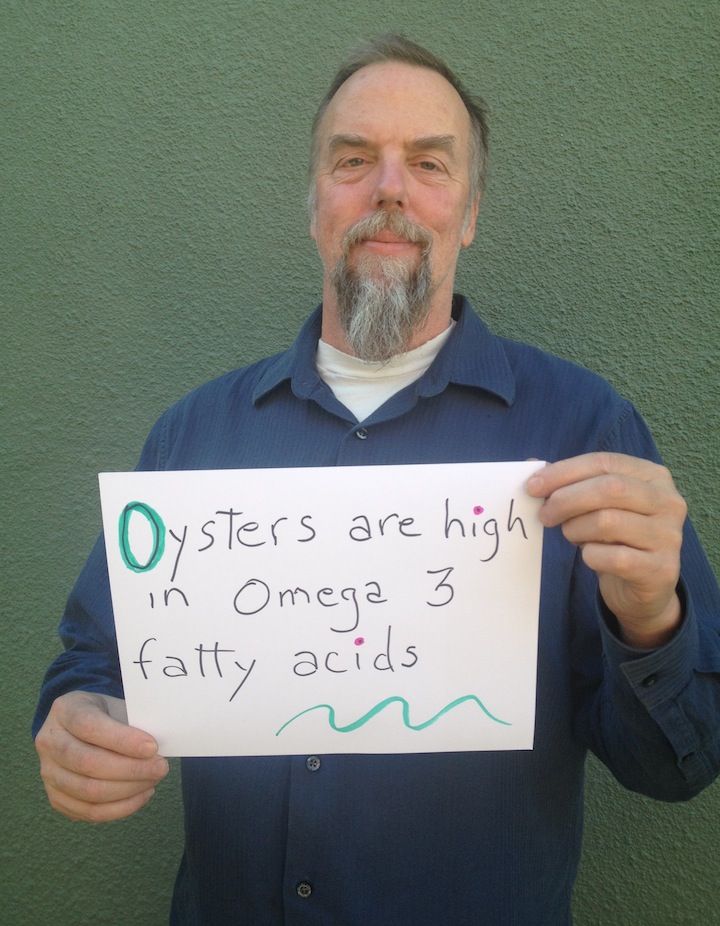
Caterer & Chef Brett Shuler of Arcata says, “raw, fried, or on the half shell, oysters can provide you with a host of health benefits, among them, high levels of heart- and brain-boosting omega-3 fatty acids and … enough zinc (the aphrodisiac mineral) to keep your mojo flowing all night.” (ok, we added that last part, but there is some truth to it!)
Friday, February 13th:

In honor of Valentine’s Day, Brenna Schlagenhauf of Hog Island Oyster Company shared a “sexy” fact about oysters: “All oysters start off life as a male, but they are hermaphroditic and after one year can change to females. Within 3 years, 90% of oysters are female, so you can usually tell the gender of an oyster by the size: small ones are males, and large ones are females. An oyster cannot be male and female at the same time.” Who knew??!